Summer Read-Aloud Challenge

sunHappy First Day of Summer!  It’s finally arrived and no doubt you and your family have high expectations for the days ahead. The end of school signals a change in the family routine and as the song says, “the living is easy”. Like magic, blocks of time to relax and enjoy one another appear. Summer is the perfect time to share experiences and build memories.

In his famous book, Seven Habits of Highly Successful People, Stephen Covey encourages us to “Begin with the end in mind.” Wise parents will give thought to the hopes, dreams and goals they have for their family as summer begins. If your hope includes fostering a closer relationship with your kids, enhancing your children’s            self-esteem, spending quality time together, fostering a love of reading and enhancing reading comprehension, enjoying common experiences, increasing meaningful conversation and creating wonderful memories, the Summer Read-Aloud Challenge is for you.

Wait…don’t run away yet. This is not complicated project that will become just another task on your plate. The Summer Reading Challenge is simply a personal commitment to read aloud to your kids on a regular basis. YOU decide what that “regular basis” is for your family and I’ll support you by sharing the many perks of reading aloud, hints that will prepare you for success and great reading resources to keep you dedicated to the challenge. Additionally, I invite all of you to comment and share your ideas so we can all benefit from each others knowledge and experiences.

From now until the end of June, my blog posts will focus on motivation and preparation so that when July begins, regular read-alouds will easily become part of your family’s summer activities. See the “One Small Step” below to get you started.

Footprint  ONE SMALL STEP:  Come up with three special picture books you would  like to read or reread to your children and remember you are invited to share your idea with others by posting in the comments section.

Posted in Uncategorized | Leave a comment

Reconnect Through Reading

Of late, I’ve not been able to blog because of yet another broken wrist. Hard to believe that I could break a wrist last July and again in May when we went to Arizona. Both times, it happened on a golf course. This time, the good news was that I broke my left wrist (I’m right-handed) but the bad news is that I broke both bones, required surgery and had to get a plate in my wrist. Several weeks of physical therapy have finally paid off and I’m able to type once again.

One of the perks of a broken wrist was more time to read and research. I’ve been reading a great deal about the benefits of reading aloud to youngsters of any age (yes, even teens). This literature was so convincing, that I determined I would devote most of my summer blogs to encouraging you, my reader, to seriously commit to reading aloud to your kids on a regular basis.

Furthermore, there were two articles in the Sunday Inquirer this week that caught my eye and touched my heart. “Our Deeper Despair” by Will Bunch, in which he makes a case that the “greatest moral crisis facing America doesn’t even have a name. Or arguably, it has too many names. Despair, Alienation, Depression, Isolation. Hopelessness.” Bunch discusses the drug crisis, spike in suicides, loss of church and community organizations replaced by hours of isolated screen time, as just a few of the reasons for what he terms “deaths of despair.”

In the same section of the Inquirer, Tom McAllister, a professor at Temple University, reflects on the past academic year riddled with student deaths resulting from overdoses, murders, and suicides in his article, “A Teacher’s Greatest Challenge”. His point is that a college campus today is often a “pretty desperate place” due to the many stresses college students face.

My first question after finishing these articles was “Can reading aloud be part of a solution to the despair and isolation experienced by so many of our youth. My heart says “yes”. To that end, I will be sharing with you not only the academic benefits of reading aloud, but also examining the far-reaching emotional effects of quality time spent reading to our youngsters and providing plenty of tips and book suggestions to make it happen.

Can this be the summer you reconnect with your kids on a deeper level? Can books be the vehicle that helps you do that? Do you yearn for more quality time with your kids and often feel as though your family is spinning off in a million different directions? If so, please join me as I share how you can “reconnect through reading” over these fleeting summer months. This important series will begin on Thursday, June 21st.   Follow this blog and join in a conversation that may just make this your family’s most meaningful summer.


Posted in Uncategorized | 1 Comment

6 Important Read-Aloud Reminders

Happy World Read Aloud Day!

Dad and two kids reading

 As you gear up to read to your child and hopefully integrate this practice in your home on a regular basis, here are a few reminders to optimize the experience.

  1. Choose a text you enjoy                                                                                                Obviously, you’ll need to keep your child’s age and interests in mind, but your enthusiasm will come through if you also choose texts that pique your interest or touch your heart.

  2. Choose texts a few levels highter than listener’s reading level       A youngster’s listening level is higher than their reading level. This is one of the reasons that regular read alouds are so important. Via read alouds, you have the opportunity to share literature and other texts that your child would be unable to understand on his own. 

  3. Vary the type of text                                                                                 Read alouds are a great way to expose kids to poetry, informational texts, wonderful picture books, along with classic and popular titles.  Feed your child varied texts and you will be surprised at the impact it will make on his confidence, vocabulary and general knowledge base. 4. 

  4. Plan your stopping points                                                                            If you are reading a text that will take more than one sitting, plan ahead for where you will stop.  Stop at a place that will have your child begging for more.

  5. Enbed opportunities to stop and think, or stop and talk             This is how you show kids that “reading is thinking”. Rather than rushing through and devouring a reading, stop to allow time to reflect, ask questions, clarify or discuss. Again, if you do this on a regular basis, your child will begin to do this on his own. Any reading teacher can tell you that lack of thinking and active reading is often at the root of a comprehension problem.     

  6. Remember no one is TOO OLD for a read-aloud                                                           You can make read-aloud time equally as enjoyable as it was when your child was small. You just have to go about it in a different way. If your youngster is in fifth to eighth grade, you may have to be a bit more clever to entice them to listen, but it’s worth the effort. Start with short texts that hook them in, read aloud interesting news articles, hunt done funny poetry and let the fun begin. You’ll be so glad you did!Hopefully, you will celebrate by reading aloud to a loved one today. Hopefully, it will jumpstart a regular routine of reading aloud in your home. Truthfully, I believe this is one of the very best things parents can do to support their child’s literacy development.

Will you help?  Can you recommend a great read-aloud that we can all enjoy?

download (1)

Here’s a few of my favorite read-alouds…

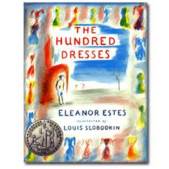
WW 2                      The Hundred Dresseson-my-honor

Posted in Uncategorized | 4 Comments

What Do We Celebrate Tomorrow?

balloons

Do you know what is celebrated around the world tomorrow, February 1st?  It’s not the birthday of a famous person, it’s not the anniversary of a special event, but it is a day that honors a wonderful practice that I’m sure all of us have enjoyed throughout our lives.

On February 1st, World Read Aloud Day is celebrated. Maybe you knew that or maybe you just learned something new. In any case, let’s take a minute to consider the power of read alouds. Can you remember someone who read to you?  Can you remember a read-aloud that touched your heart or changed your thinking? Can you remember anticipating storytime when you were young? I’m going to bet you anwered “yes” to one or more of those questions. In my opinion, that’s the point of Read Aloud Day–to remember the positive effects of reading aloud and to replicate them for our youth.

Do you want your young reader to experience the power and possibility inherent in a read-aloud?

Do you want to instill a love of reading in your child?

Do you want to bond with your youngster in a unique way and open the door to rich discussions and meaningful conversations?

Do you want to enhance your child’s comprehension skills, vocabulary and fluency in an authentic and enjoyable manner?

Do you have a treasure trove of favorite books, poetry, short stories or articles you long to share?

I could go on and on highlighting the power of read-alouds. There is no downside to this practice and there is no one too old to enjoy it. So what are you waiting for? Today, choose a text you love and want to read aloud to your child (or whole family). You’ll be all set to celebrate World Read Aloud Day. What a great reason to begin reading together on a regular basis.

Will you help?  Please share a favorite text or read-aloud experience to encourage and support other people. Here’s mine…

For Ages 8 to 10:  Testing the Ice by Sharon Robinson: Readers get to see a different side of Jackie Robinson in this picture book written by his daughter. Be sure to discuss the literal and figurative ways that Jackie Robinson “tested the ice” after reading the  story.

Testing the Ice

For Ages 11-14:  The Last Days of Mrs. Bixby by John David Anderson:  Full disclosure – I’m only on page 51, but I can already see that the voice and humor in this book about a special teacher, would be very enjoyable to kids this age and I’m sure it will have a poignant ending that I’ll long remember. I’m recommending this in the hopes that if you read the first chapter aloud, your kids will grab the book and keep on going.

Ms. Bixby's Last Day

Check back tomorrow when I’ll celebrate World Read Aloud Day by offering a few tips to remember about reading aloud.

Posted in Uncategorized | 2 Comments

Five Easy Ways to Boost Background Knowledge

My husband is a huge football fan. As soon as August begins, those fantasy football magazines start popping up around the house. One day, I decided to delve into one and learn a little about football. I could easily read all the words. I could not easily understand what I read. The reason was simple–I had very little background knowledge. Lacking any genuine interest, I had rarely watched and never really learned to understand much about football. Consequently, even though I could decode all the words, I could not comprehend what I read. I share this as an example of the importance of background knowledge. Researchers agree that background knowledge is essential for reading comprehension. It certainly makes sense that the more you know about a topic, the easier it is to understand a text dealing with that topic.

As a parent, you are in a strong position to build your child’s background knowledge. Making a conscious effort to build background knowledge is like putting money in the bank. Your youngster will be able to make a “withdrawal” when trying to make sense of text. Try these suggestions and start making deposits in your child’s bank of knowledge that will translate to his improved ability to comprehend text:

  1. Share your interests, hobbies, experiences with your child.                                  Talking to your child is one of the best ways to build his knowledge of the world around him.
  2. Visit new places. You don’t need to take a vacation to take your child somewhere he’s never been. Communities are filled with museums, parks, and events that offer new information and experience for your child to enjoy. Seek them out.
  3. Encourage wide reading and visit the library often. Since there is no charge, youngsters are free to take home a variety of book. Easy, informational books are a great way for your child to become acquainted with many topics.
  4. Use games to make learning fun. Play games that encourage kids to categorize, compare and contrast, answer tricky questions, make analogies and learn about famous people, places and events.
  5. Use multimedia. Although personal experience is ideal, technology today offers an accessible and enjoyable way to learn. Encourage your child’s curiosity and learn together by exploring the many ways technology can advance learning.
Posted in Uncategorized | 2 Comments

Picture Books: Building Blocks of Background Knowledge & Confidence

quote

Over the years, I’ve worked with students of all ages, from primary grade kids right up to graduate students. Picture books were a common element in everyone one of my classes. Why?  Because I believe picture books have power.  A well-written picture books offers rich vocabulary, meaningful content, beautiful art and background knowledge in a short format.  Along with all these (and many more) perks, picture books build confidence.

When the ability to read and comprehend doesn’t come easily, students often doubt their intelligence and ability to learn. Parents and teachers need to join forces and find ways to head off waning confidence and motivation. The accessible format of a picture book can become a powerful tool in your quest to help a struggling child.

The previous post discussed how background knowledge positively affects comprehension. There are fictional and non-fictional picture books available on every possible topic. Explore the possibilities and begin to expose your child to the wealth of information available. No one is too old to appreciate and learn from a picture book. If you know your child will be studying a certain period of history, scientific concept, famous person or event, head to library and bring home picture books on that topic. Read them together if possible and discuss their content.  Building familiarity with the topic will enable your child to feel more confident (and probably much more interested) when this topic comes up in the classroom.

Worried about the lastest “project” assigned? Again, picture books can ease the process. Don’t let your child rely solely on information from the Internet, but show him that picture books deliver information in a concise and interesting manner that is often easier to comprehend than dense text. Remember the power of picture books and watch your child’s confidence soar.

Posted in Uncategorized | 1 Comment

Three Essential Steps to Seeking Reading Intervention for your Child

conference
Once you suspect that your child needs some kind of reading intervention, it’s time to get the ball rolling.
Step #1 – Rule out any physical problems
Talk with your child’s doctor about your concerns. Physical problems can be at the root of academic problems. Let your doctor rule out vision, hearing, attention problems or any other physical concerns that may be interfering with his reading progress.
Step #2 – Make an Appointment with the Teacher
Once you know there is not a physical problem at the root, it’s time to make an appointment with your child’s teacher. Often waiting for conference times scheduled by the school through the course of the year is not a good idea because teachers are seeing parents one right after the other and there are tight time constraints. Call or email the teacher and ask her to block out thirty minutes or so to meet with you at a mutually convenient time. If possible, attend with your spouse and leave the kids at home so you can focus your full attention without being distracted or interrupted.
Step #3 – Collect Information and Come Prepared
A teacher worth her salt will be gathering data about your child to share with you. As a parent, you need to do the same. Think of this as a team effort and come prepared with data of your own. Here’s how:
  •  Bring a Written List of Important Information                                                                 Teachers are busy people.  When parents come in prepared, it helps the meeting move smoothly, address all the issues and establish a sense of teamwork. Spend time before the meeting carefully observing your child and making a list of behaviors that concern you regarding your child’s reading or academic habits. Use the list in the previous post to help you Does My Child Need Help? Ten Warning Signs of a Struggling Reader. Be prepared to discuss your child’s strengths and weaknesses, sleep or emotional issues, how he perceives himself and any insights you can provide. In addition to current behaviors, reflect on any information about your child’s early years that might be helpful. For example, issues with ear infections, delayed language development, difficulty learning letters and sounds, and so on.   Information that only you have may be very helpful in diagnosing the specific interventions that will help your child.
  • Bring a Written List of Questions                                                                                                 Jot down your questions so that you don’t leave the meeting and realize you have neglected to get answers.
  • Consider Your Expectations                                                                                                            It’s important to have a sense of what you would like to see happen and how the teacher will follow up on your concerns. Be specific and nail down a date and time to touch base again (this can be via an email or phone call) to check in on progress.
What to Expect                                                                                                                                    
Chances are if your child is in fourth grade or beyond and the school has never suggested evaluation for special education or mentioned a learning problem, your child will simply need some extra help from the teacher or reading specialist to boost progress and confidence.  Your concerns are valid and you should go into the meeting with an expectation of receiving support.  Typically, the teacher will create some kind of action plan, try it for a while, collect data and meet with you again after an appropriate period of time. At that point, if there has been no improvement, usually other staff (school psychologist, reading specialist, etc) are called on for support and planning.
It’s important to remember that you play an essential role in implementing support for your child. The school may suggests that you do certain things at home on a regular basis to reinforce their efforts with your child. Keeping open the avenues of communication and creating a positive working relationship with the school is one of the best ways to insure that your child receives the support and intervention that will move him forward.
Parents, most professionals realize you are worried and that it is not easy to take these steps. Keep in mind, however, that there are people committed to helping you and your child learn about the reading process and implement strategies that will boost not only your child’s academic progress, but also his confidence and ability to enjoy reading. I welcome your comments, questions and concerns. Good Luck!
Posted in Reading Intervention | Leave a comment

Does My Child Need Help? Ten Warning Signs of a Struggling Reader

red-flagRECOGNIZE THE PROBLEM 

As parents, we desperately want life to be joyful and problem-free for our children. It’s not always easy to address problems or uncomfortable situations. Obviously, the first step in helping your child become a more confident, proficient reader, is to recognize that he or she needs support. Many parents waiver when it comes to actually facing the fact that their child is not making adequate progress.  If you have the niggling feeling that additional reading support would boost your child’s progress, don’t wait. Like most problems, the sooner it is addressed, the easier it is to fix.
arrowTAKE ACTION
As many as forty percent of students experience reading problems at some point. Students can fall behind for a number of reasons and often a little extra support will get them back on track. It can be a fixable situation if you face it head-on and advocate for you child. Once students reach the intermediate grades, they become very adept at hiding their struggles so it’s important to look for red flags that indicate the need for intervention. If you recognize your child as you read this list of warning signs, take action.
 TEN WARNING SIGNS OF A STRUGGLING READER
1.  Your child doesn’t like to read.
2.   Your child “pretends” to read but can’t retell or remember details.
3.   Your child’s reading grades and standardized test scores are low.
4.   Your child is unable to read for a sustained period of time (20 minutes or more).
5.   Your child lacks expression when he/she reads and frequently miscues.
6.   Your child demonstrates or expresses a lack of confidence when reading.
7.   Your child struggles with written assignments.
8.   Your child always chooses short, easy books to read independently.
9.   Your child dislikes school and has a poor self-image when it comes to academics.
10.  You have to bribe, pressure or argue to get your child to read a book or complete a
       reading-related assignment.

Check out this article from Schlastic for additional information scholastic.com/…/how-to-know-if-your-child-needs-reading-intervention and see Monday’s post for specific steps you can take if you think your child would benefit from reading intervention. A problem shared is a problem cut in half. Feel free to share your questions and concerns.  Take heart, because there’s help available and most children make rapid progress once their specific needs are addressed.

Posted in Uncategorized | 3 Comments

M-A-G-I-C Books Turn Kids into Readers

magic_book_by_caglarcity


Tale of a Magic Book

I’ll never forget the first time I saw the magic at work. It was well into October and one of my students had yet to finish a book. It was like he was allergic to reading. At the time, my own son was the same age and was immersed in reading The Fab Five, which recounted the tale of the famous Univerity of Michigan basketball team. I offered it to Donny and like magic, he finished it in no time flat. I still have the response letter he wrote to me, admitting that it was the first book he had ever finished in his life. Wow! It brought tears to my eyes. By the end of the year, Donny had finished another eight books, even ones that were not sports-related.

What is a Magic Book?

Over the years, many versions of that story have played out as I realized the power of connecting reluctant readers with a “Magic” book. By my definition, a Magic book is a book that will reel them in like no other, speak to their heart and remain in their mind as an example of the power and pleasure of reading.

How Do I Find A Magic Book?

There really is no magic formula, but here is an acronym that may help in your quest to find magic books for your child. At times, the quest can be daunting, but when you find the magic, it’s well worth it!

M – MOTIVATION: The book will have a strong appeal to the reader, inspiring him to open the pages.

A – ACCESSIBILITY: In educational lingo, an accessible book simply means that the reader is able to read and enjoy it with little or no support. Don’t rely on reading level alone to determine a book’s accessibility. Background knowledge, font size, pictures and other text supports, as well as motivation to read it, are all factors that help make a book accessible.

G – GENRE:  Short texts, magazines and read alouds can clue you in to what appeals to your child. Find great books in an appealing genre to whet your child’s appetite.

I – INTEREST:  Consider your child’s hobbies, struggles, unique situations or basically anything that gets to the core of who he/she is. Find related books and see what happens.

C – COMPREHENSION:  The ability to understand and follow the text is crucial if it’s going to be enjoyable.  Have your child read a page aloud and keep track of  words he is unable to identify. If it’s more than five, the book is probably too hard. After your child begins to read, check in with him. Can he retell the story, keep the characters straight, understand the background? Help clarify confusions to make the book go more smoothly and heighten the ease and pleasure of reading.


Posted in Black History, Choosing books, Motivation, Uncategorized | 2 Comments

Worried about your child’s reading?

parents-angry

After learning more about blogging and reflecting on how I can best serve readers of this blog, I’ve decided to direct posts to parents of children in Grade 4 through 7 who are reluctant readers or readers who need support to progress and keep up with their peers. I’ve decided to make these changes for two reasons. My own research reveals that resources for parents of children in grades four through seven are limited. As students advance to the intermediate grades, parents often have lots of questions but limited resources. Most of my experience as both a classroom teacher and reading specialist has been in these grades. It just makes sense for me to draw on that and share it with you.

Although many of the posts I’ve written and will write can benefit any parents hoping to boost their child’s literacy skills, in the future, I will specifically target parents of children requiring support and/or those aliterate readers who can read but simply don’t like to read! Look for solid information based on current research and best practices, strategies and ideas you can easily implement, book suggestions for you and your kids, answers to your questions and concerns and most importantly, encouragement.

In my thirty-three years of teaching, I’ve been privy to the heartache and frustration parents experience when their child struggles with reading. Many parents have openly shared their worries, frustration and discouragement. Although I recognize the challenge, I know that with the right interventions and support, the transformation from a struggling reader to a proficient one can occur. A parent’s support, coupled with know-how is a significant part of that process and will make a huge difference in a child’s life.

So as a New Year begins, my goal is to offer information and resources to anyone concerned about a child’s literacy development. My goal is to provide a place to vent, find answers, ease worries and learn tangible ways you can boost not only your child’s ability to read but  love of reading. My goal is to shine a light on a path to progress and proficiency for your child. If you have concerns about your child’s reading, if you are sick with worry and don’t know how to help, if you believe your child is not receiving the support he needs from school, if you don’t have a clue where to begin to find help, you are not alone. Help and a huge dose of hope are here. We’ll take it a step at a time and find a way to get your child on the road to success. 


Posted in Uncategorized | 2 Comments